
Join the Let’s Review 182 Campaign
The new Welsh Government is reviewing the 182-day rule. We need to work together to make sure the review delivers meaningful change.
Since launching Dioni’s Let’s Review 182 campaign in October 2025, holiday cottage owners, tourism businesses and supporters across Wales have helped build the case for change.
Together, we’ve helped bring the experiences of genuine tourism businesses into the national conversation.
On 31 July 2026, the new Welsh Government announced a review of the 182-day threshold, creating an important opportunity to develop a fairer policy that supports genuine tourism businesses while continuing to distinguish holiday let businesses from second homes.
The review is an encouraging step, but we can’t assume that it will lead to meaningful change. Now is the time to make sure the voices of genuine tourism businesses and rural communities help shape the final policy.

What We’ve Achieved Together
Since launching our Let’s Review 182 campaign in October, we’ve made real progress.
- The campaign has generated widespread media coverage, with stories featured by The Telegraph, The Times, BBC News, ITV News, Welsh regional newspapers and tourism trade media.
- Local authorities including Gwynedd, Powys and Pembrokeshire have publicly recognised the challenges the current policy is creating for genuine holiday let businesses.
- Holiday let owners from across Wales have shared their experiences, helping ensure the voices of rural businesses are part of the national policy debate.
- The Welsh Government has announced a review of the 182-day threshold.
Our Campaign Asks
We support the principle that business rates should apply only to genuine holiday letting businesses.
However, we believe the policy can achieve that objective more fairly.
We are calling for three practical changes:
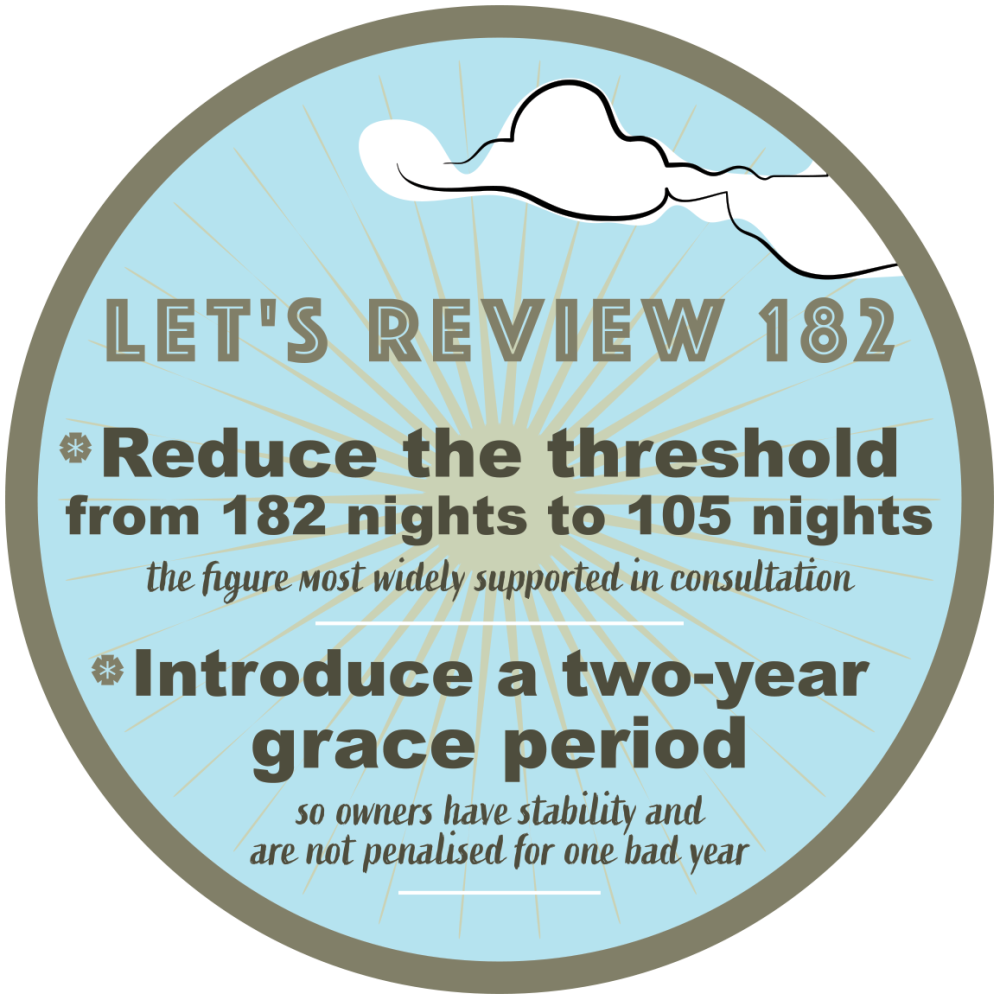
A 105-night threshold
The Welsh Government’s own consultation (in 2022) found that 105 nights was the most widely supported option.
A two-year grace period
Business owners should not be penalised because of one poor trading year or circumstances beyond their control, such as illness, extreme weather or essential property repairs.
A broader test of business activity
The number of nights let should not be the only measure of commercial intent. Marketing activity, investment and operational evidence should also be considered when distinguishing genuine businesses from second homes.
Why the Review Matters
The 182-day threshold was introduced in 2023 to ensure that only genuine holiday let businesses qualified for business rates.
However, more than three years later, holiday let operators across Wales have reported financial hardship, uncertainty and increasing difficulty meeting the threshold despite operating as legitimate commercial enterprises.
Businesses that fail to meet the threshold can be transferred from Business Rates to Council Tax, where they may also become liable for council tax premiums of up to 300%, creating significant and often unexpected financial pressures.
These businesses shouldn’t be taken for granted. They are part of wider rural supply chains, supporting local jobs, tradespeople, hospitality businesses and visitor attractions. When they disappear, rural communities don’t just lose visitor accommodation – they lose the employment, investment and visitor spending that help sustain local economies throughout the year.business rates.
Now, more than 30 months later, it’s clear that the rule is unrealistic in seasonal areas like rural Gwynedd – and it’s driving genuine small operators out of
business.
This policy was meant to target second homes, but instead it is punishing community-rooted businesses that sustain local jobs and services.
The consequences are real:
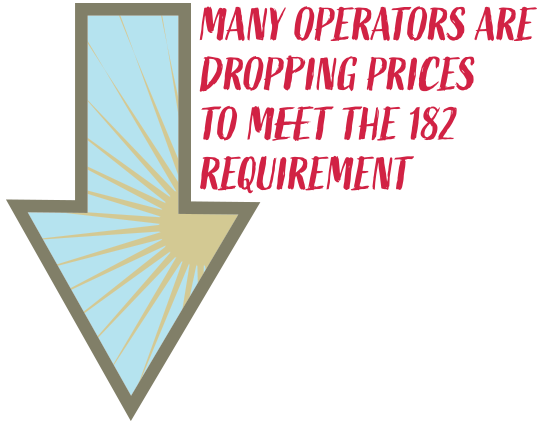
Revenue pressures are forcing many owners to slash prices just to reach the 182-night threshold.
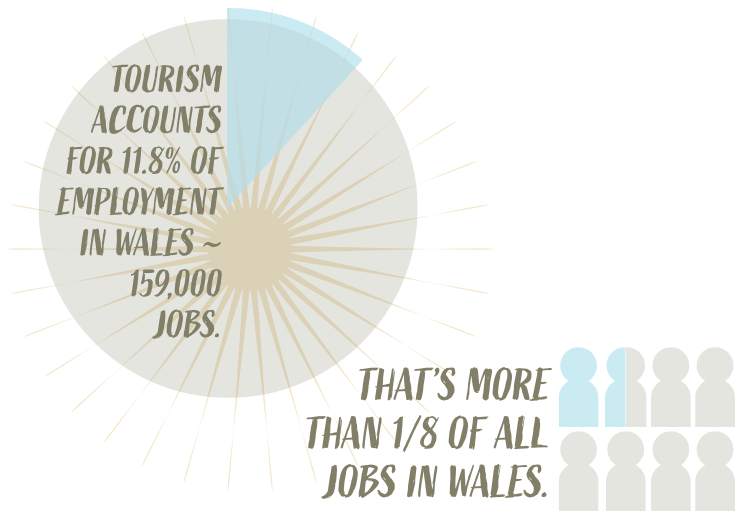
Industry groups warn this policy puts thousands of tourism-related jobs at risk.
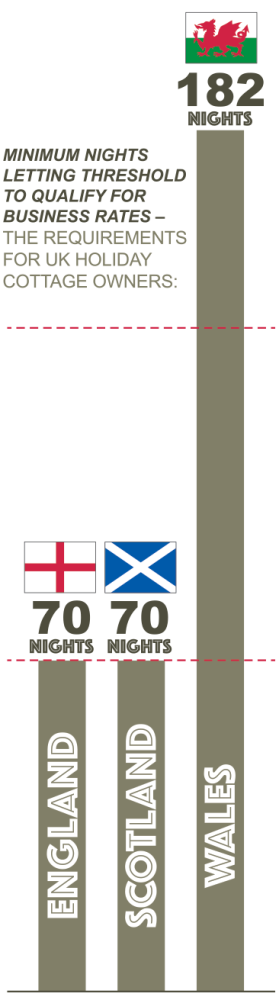
The Welsh threshold is far tougher than England’s – 182 nights vs just 70 nights let – leaving Welsh business owners at a competitive disadvantage.
What the Evidence Shows
More than three years after the policy was introduced, the evidence continues to build.
Local authorities across Wales have increasingly recognised the challenges created by the current policy.
Genuine holiday let businesses across Wales have reported increasing financial pressure and uncertainty, with a significant number leaving the sector altogether.
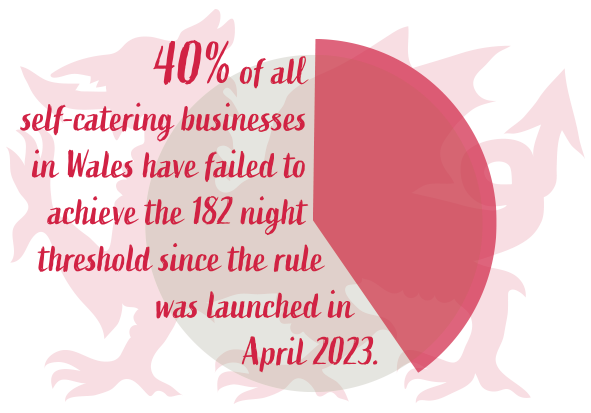
Around 40% of Welsh holiday lets failed to meet the 182-day threshold after the policy was introduced, highlighting the challenges many genuine operators face in seasonal destinations.
Some owners have become liable for Council Tax and premium payments on holiday accommodation that can never be occupied as a permanent home because of planning restrictions or because it forms part of the owner’s own property.
Make Sure Your Voice Is Heard
Three years of real-world experience have provided a much clearer picture of the policy’s unintended consequences, while there remains little evidence that it has achieved its original objectives (including freeing up affordable housing stock).
This latest review provides an opportunity to look again at the policy as a whole and ensure it achieves its original objective of increasing the availability of affordable housing, without unfairly penalising genuine holiday let businesses.
It may also be the best opportunity for many years to help shape a policy that works for operators, communities and Wales’ visitor economy alike.
Now it’s your opportunity to help shape the outcome.
Whether you own a holiday cottage, work in tourism or simply care about the future of rural communities, we encourage you to take part in the Welsh Government’s review and share your views.
Respond to the Welsh Government’s consultation:
https://www.gov.wales/classification-self-catering-properties-local-tax-purposes
If you would like to do more, please consider contacting your local Member of the Senedd and local councillors to explain how the current policy has affected you, your business or your community. Personal experiences and local evidence will help ensure decision-makers understand the real-world impact of the 182-day threshold.
Stay Connected
Join a growing community of holiday cottage owners, tourism businesses and supporters working together for a fairer, evidence-based approach.
We’ll keep you updated throughout the review and let you know when there are opportunities to contribute evidence, respond to consultations and support the campaign.
Together, we can help shape a policy that supports thriving rural communities, a resilient visitor economy and genuine holiday let businesses across Wales.

Spread the Word
#FairNightsWales
Help us build momentum!
Ystyriwch rannu’r ymgyrch gyda ffrindiau, teulu a chydweithwyr – gyda’n gilydd gallwn wneud gwahaniaeth.
Please consider sharing the campaign with friends, family, and colleagues – together we can make a difference.
“I’ve just written to my MS to support a fairer 105-night threshold for holiday cottages in Wales. Join me!” #FairNightsWales COPY TEXT
Wales is Left Behind – Yet Asked for More
In England and Scotland, holiday cottages still qualify for business rates if they are let for just 70 nights a year. In Wales, the threshold has been raised to
182 nights – the toughest rule anywhere in the UK.
Minimum nights letting threshold to qualify for Business Rates
– the requirements for UK holiday cottage owners:
England 70 nights
Scotland 70 nights
Wales 182 nights
This means Welsh business owners must prove 2.6 times more bookings than their counterparts in England or Scotland just to access the same business
rates.
And the penalty for falling short is severe: properties are reclassified as second homes and hit with council tax bills that in some areas of Wales could
include a 300% premium.
All of this comes at a time when Wales is already lagging behind the UK average on key economic indicators: primary income, disposable income, GVA per
head and employment rate.
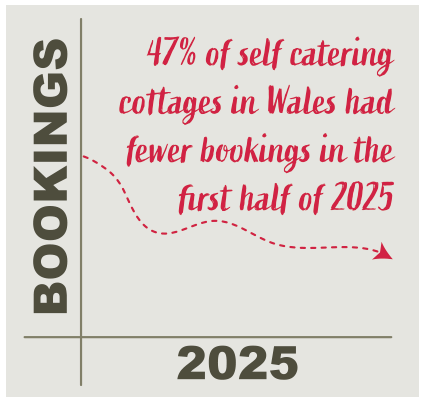
The timing could hardly be worse. Holiday cottage bookings across Wales are down, and with the UK forecast to have the highest inflation in the G7,
holidaymakers are cutting back, often opting for shorter breaks. These trends make it even more unrealistic for Welsh owners to reach the 182-night target.
The result?
Viable, community-rooted family businesses are being forced out of the market, adding pressures to already fragile rural economies.
40% – of Welsh holiday lets have failed to meet the 182-night rule since April 2023
“The goal of ensuring that only genuine holiday lets qualify is understandable. But the 182-night requirement is unrealistic and unfair – it ignores rural
seasonality and is forcing viable businesses to close.” Gwion Llwyd, Welsh Farmer and Owner of Dioni Holiday Cottages
Contact: louise@dioni.co.uk
This campaign is led by Gwion Llwyd of Dioni Holiday Cottages, working with local businesses and communities across Wales.
Privacy note:
We will only use your information to send campaign updates and will never share it with third parties.