Explore Wales’ Industrial History: 5 Slate Quarry Walks in North Wales
Published on 12 Oct 2026 by Amy GreenwoodThe history of Wales is visible for all to see, and one thing that Wales has always been famous for is the production of sought-after Welsh slate. The excavation and production of slate in Wales has been happening for centuries but the heyday of Welsh slate production was in the early to mid 19th Century. The industry witnessed many prosperous years of production and provided jobs for thousands of workers across the nation during the industrial revolution. The slate landscape of North Wales is not only a reminder of this period of Welsh history, but also provides a unique feature of the landscape that’s fascinating to explore.
Slate mining and quarrying eventually declined in the middle of the 20th century, and whilst slate is still being produced in Wales, many of the famous, most industrious quarries have long been abandoned.
Whilst these quarries lay dormant, their significance and their importance are not forgotten. In July 2021, after development of a bid for over 10 years, the slate landscape of Northwest Wales was inscribed as a World Heritage Site by UNESCO.
There are a number of walking trails that take in this landscape, including the famous ‘Snowdonia Slate Trail’ which starts in Bangor and loops through the key quarrying sites in Eryri including Bethesda, Nantlle, Ffestiniog and Rhyd Ddu to name a few.
But if this 83 mile trail feels a little ambitious, there are plenty of shorter walks and ways to access some of these industrial landscapes and we thought we’d share a few with you in this post.
Dinorwig Quarry – Llanberis
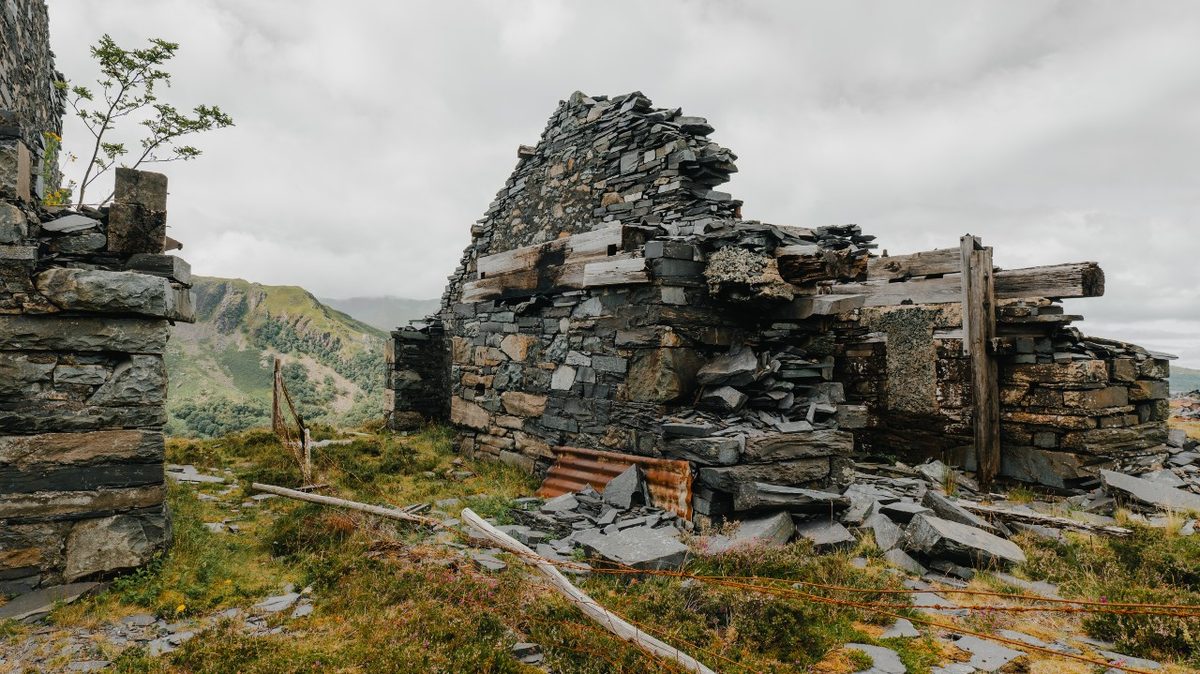
At its peak, Dinorwig slate quarry was the second largest in the world, with its imposing galleries towering high above the town of Llanberis. It’s an astoundingly beautiful landscape, with Yr Wyddfa (Snowdon), Llyn Padarn and Llyn Peris at its heart. At the foot of the quarry you’ll find the Welsh Slate Museum, here, you can park and explore the numerous designated walking trails that take you up into the quarry and the surrounding landscape. You can visit the Anglesey Barracks, a row of derelict cottages that would have been used as accommodation for the quarry workers, and take in the breathtaking views of the valley as you ascend higher and higher into the quarry.
You can also see evidence of the cutting sheds where the slate would have been cut and shaped into tiles, as well as the remains of the tracks and pulleys that would have transported the slate from the upper galleries to the transport links below.
You’ll likely not be alone on your visit to Dinorwig, the welsh mountain goats can often be seen traversing this landscape, and can often be seen grazing along the paths.
Dorothea Quarry – Nantlle
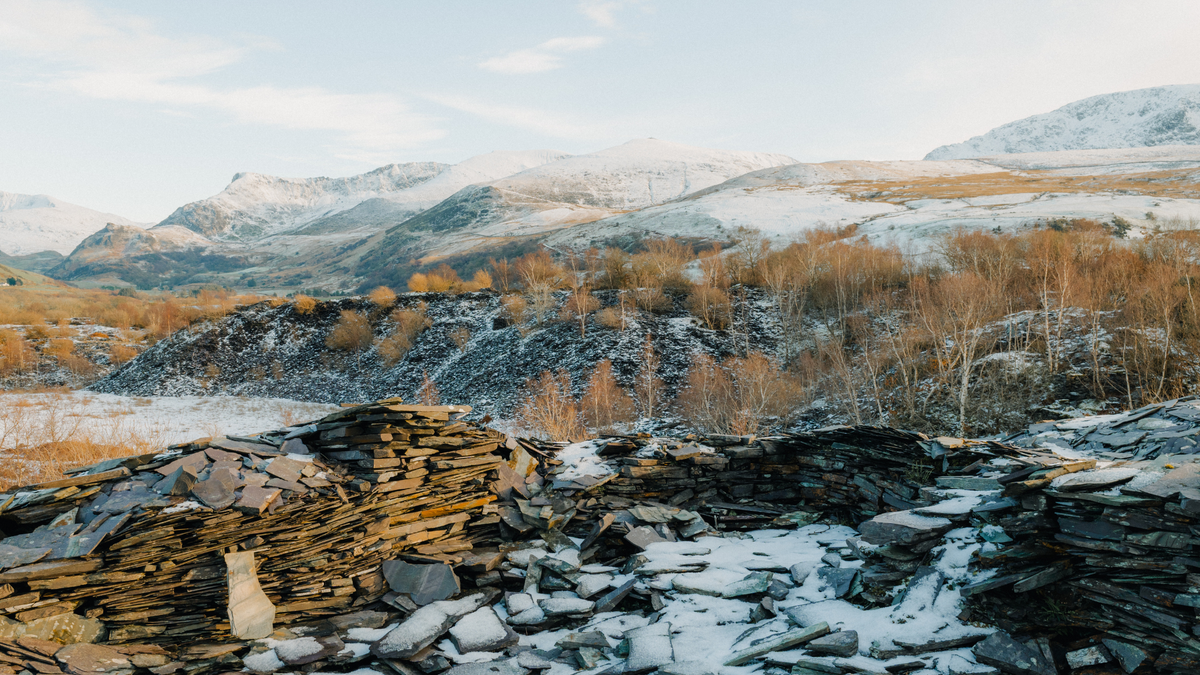
One of the most beautiful valleys in Eryri is the Nantlle valley, dominated by the summits of the Nantlle Ridge and Y Garn. This valley is typically quieter than some other areas of the national park and it’s in the village of Nantlle that you’ll find the remains of Dorothea Quarry.
This quarry is much smaller than the likes of Dinorwig, but is just as fascinating and interesting to explore. The quarry opened in 1820 and was the largest quarry in the area by the middle of the 19th century, employing over 200 men and producing 5000 – 6000 tonnes of finished slate every year. The quarry eventually closed in 1970 but is still accessible today with a number of designated walking trails.
Its proximity to the village of Nantlle makes it incredibly accessible, parking is free by the roundabout at the end of Nantlle Road (postcode LL54 6AF).
Some of the most interesting features of the quarry include:
- The lake that was created when the quarry was flooded.
- Derelict quarry buildings and evidence of machinery
- The derelict manor house and evidence of the old village within the quarry itself.
- Expansive views down the Nantlle Valley
After your walk, be sure to head to Poblado Coffee for some of the best coffee in Eryri.
Cwmystradllyn – Gorsedda Quarry
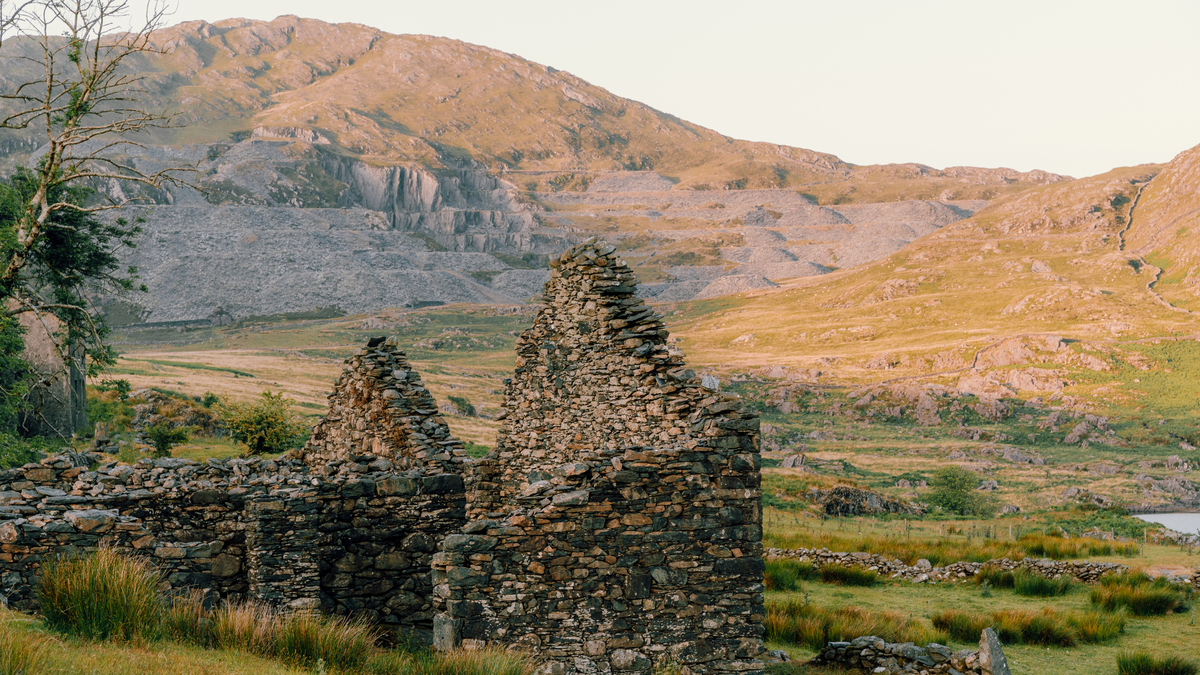
Cwmystaddlyn is a quiet, picturesque valley and reservoir in North Wales, located below Moel Hebog and the Moel Ddu mountains. It was also home to the Gorsedda Slate Quarry which was developed in the golden age of the slate mining industry between 1850-1870. The quarry received huge investment but the quarry failed in a few short years due to the poor quality of the rock. Though short lived, the remnants of this quarry, paired with its quiet, beautiful location, makes it one of the more interesting sites to visit.
Parking near the reservoir, you’ll see the quarry workings and a smattering of stone buildings in the valley ahead of you. These buildings form the, now abandoned, village of Treforys. Built in the 1850’s, the village consisted of eighteen pairs of two roomed cottages and were built specifically for the workers of the quarry. The ruins and remains of these cottages can still be seen and explored today.
On your approach, as you drive towards the reservoir, you’ll also see the imposing structure of the Ynysypandy Slate Mill. This ambitious multi-storey cutting mill was constructed to serve the quarry at Grosedda and is well worth a visit.
Whilst there are plenty of walking routes in this area, the area itself is relatively small and therefore is easy to explore if you just want to take in the surroundings and wander around the reservoir and the remains of the old cottages and buildings.
The ground in parts can be quite marshy so care should be taken.
Penmachno Quarry
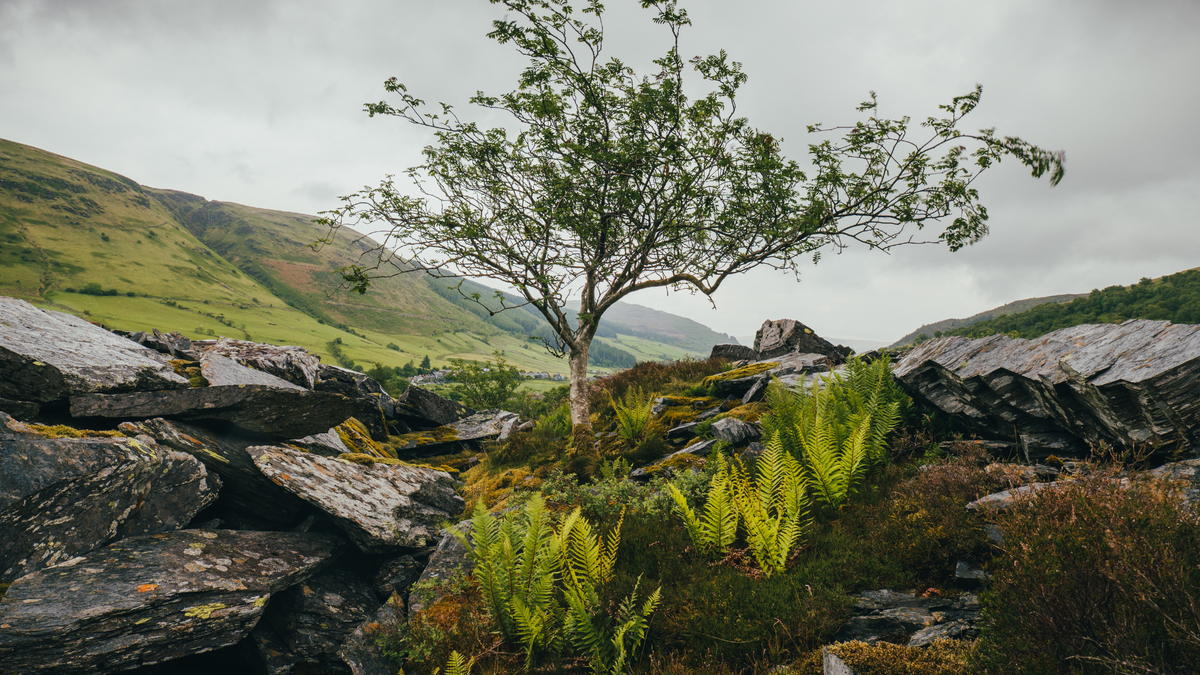
The Penmachno valley, near the town of Betws Y Coed, is one of the quieter valleys in Eryri National Park. At the foot of the valley, in the village of Cwm Penmachno, you’ll find the remains of the Penmachno slate quarry. This quarry forms part of the Snowdonia Slate Trail so the route towards and through this quarry is very easy to follow with well-defined paths.
The quarry was built in the early 19th century and remained operational right up until the 1960s. It’s one of the more unique quarries in North Wales as it was one of the only quarries that didn’t have a dedicated rail transport network to transport the slate from the quarry, the quarry instead relied on horse and carts, and eventually lorries to move slate.
Parking can be found at the entrance to the quarry near the bus stop at the end of the village of Cwm Penmachno (grid reference 53.007588, -3.860093). Here you can pick up the footpath and begin your walk up through the quarry. The path is quite steep but there’s plenty to see and explore along the way – we definitely recommend you stop to admire the views back down the Penmachno valley.
This is very much a there-and-back walk, we recommend walking through Penmachno quarry, following the path through the pine woodland until you emerge at the next set of quarry workings (52°59’52.7″N 3°52’45.9”W). Here you can spend some time exploring before following the path back, or continuing further if you wish.
Cwmorthin / Rhosydd Quarry
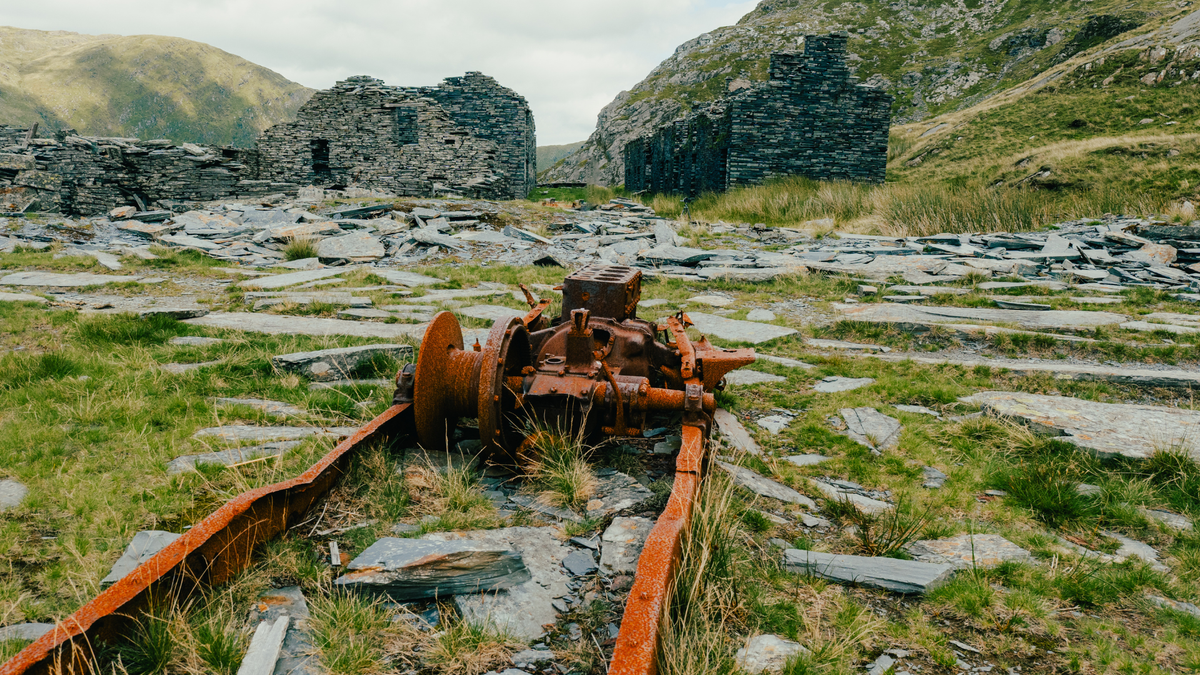
Located amongst the Moelwyn Mountains above the villages of Tanygrisiau and Blaenau Ffestiniog, Rhosydd Quarry is situated in an idyllic location. The walk begins from the Cwmorthin Waterfall car park outside the village of Tanygrisiau. This is a lovely place to start and end the walk as you can enjoy spending some time at the waterfall that runs right next to the car park. From here, the walk begins steeply up the slope towards the valley of Cwmorthin. This is a short ascent and you’ll emerge at the valley basin where you’ll find the lake, the white mountain bothy and the evidence of the old quarry workings. Here, you can spend some time exploring ruins of the barracks or just relax by the lake.
Following the path to the left of the lake will take you further up the valley where you’ll find the remains of the old chapel. Capel Rhosydd or Capel y Gorla as it was known, is a 19th century chapel erected to serve the quarry community. Now in an ever-increasing state of ruin, it’s an atmospheric reminder of the community that lived and worked in this remote valley.
As you move past the chapel, following the path, you’ll eventually come to a gate which begins the next climb up to the Rhosydd quarry workings which are situated on a plateau above the Cwmorthin valley. Although steep, It’s only a short walk. The barracks and buildings associated with Rhosydd quarry are surprisingly well preserved considering their exposure to the harsh elements of the surrounding landscape. This expansive plateau offers fantastic views of the surrounding mountains and is a really interesting place to explore.